How to Become a Full-Time YouTube Creator in 2026
Want to become a full-time YouTube creator? Learn the algorithm signals that matter, content types that perform best in 2026, and exactly what to do in your first 90 days—backed by insights from creators who've already made it.
In 2023, Emma Chamberlain was making lattes in her parents' kitchen, filming the chaos for YouTube. She turned mundane coffee routines into must-watch content, grew to 12 million subscribers with her unfiltered personality, then asked: "What if I sold the coffee I actually drink?" Chamberlain Coffee launched, backed by an audience who already trusted her taste. Two years later, she sold it for eight figures. This isn't a fairy tale—it's the creator economy blueprint.
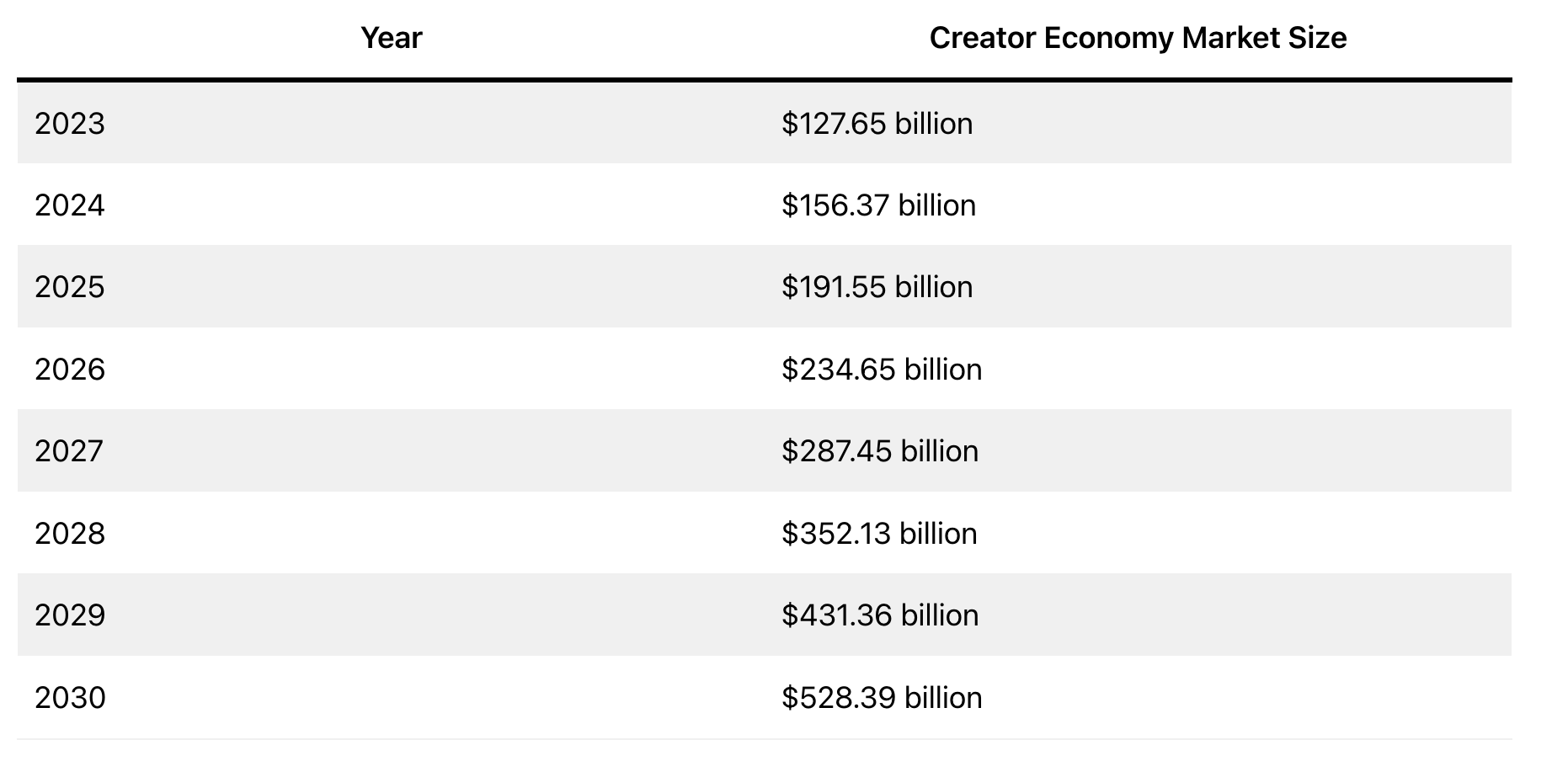
The creator economy is valued at $191.55 billion today and projected to reach $528 billion by 2030. But here's the reality check: while 50% of creators earn under $5,000 annually, 7% make over $100,000. Nearly half (46.7%) of all creators now work full-time.
The question isn't whether you can go full-time in 2026—it's whether you're willing to do what it takes.
This guide breaks down exactly what "what it takes" means — from understanding each platform's algorithm to building multiple income streams. You'll get data-backed strategies for YouTube, Instagram, and TikTok, insights from creators who've already made it, and a realistic 12-month roadmap to turn your content into a sustainable career. No fluff, no false promises — just the real path to full-time creation in 2026.
The Foundation: What You Need Before Diving In
Before we dive into YouTube strategies, let's establish the fundamentals that separate successful creators from those who burn out in six months.
The Reality of Full-Time Creation
Before you quit your day job, understand what "full-time creator" actually means in 2026.
70% of high-earning video content creators spend at least 4 hours a day on content creation — and that's just the filming and editing. Add strategy, analytics, community management, and business operations, and you're looking at a genuine full-time commitment.
The timeline? Creators take about six and a half months, on average, to earn their first dollar. Not their first $1,000. Their first dollar. Success typically takes 7-8 years of consistent effort, according to YouTube creator statistics.
The Three Universal Struggles
Research with over 50 creators and 12 in-depth interviews uncovered three challenges plaguing creators across all platforms: consistency, monetization, and imposter syndrome.
Here's what that looks like in practice:
Consistency: 65% of creators admit they don't have a reliable content workflow, and 42% struggle to repurpose content efficiently. Without systems, you're constantly starting from zero.
Monetization: Most creators feel uncomfortable "selling." The key is shifting from hard-sell tactics to value-driven monetization — where making money feels like a natural extension of helping your audience.
Imposter Syndrome: Even successful creators battle this. The antidote? Focus on progress, not perfection. MrBeast's advice rings true: "You're crazy until you're successful, then you are a genius."
Critical Success Factors (All Platforms)
Understanding the challenges is step one. Now let's talk about what actually separates the top 7% of earners from everyone else.
1. Build Systems, Not Just Content
The most successful creators treat content creation like a business. That means:
- Documented workflows for ideation, production, and distribution
- Content calendars planned weeks (or months) ahead
- Templates for thumbnails, captions, and editing
- Batching similar tasks for efficiency
2. Diversify or Die
69% of TikTok users follow creators over topics, which proves personal brand trumps platform. But platforms change overnight — ask any creator who built exclusively on Vine, or those facing TikTok's uncertain future in 2025.
Your insurance policy? Build on multiple platforms simultaneously and own your audience through email lists.
3. Think Like a Business Owner, Not a Hobbyist
98% of creators earn through affiliate commissions, and 77% rely on brand deals. The top earners don't just create content — they build businesses around their content. That means tracking metrics, negotiating contracts, understanding tax implications, and treating every video as an investment.
Nathan Barry, CEO of Kit, explains it perfectly: "Most of the most successful creator businesses today are just built on those two principles: getting great at driving attention in an algorithm, and then capturing it in email."
YouTube: Building Your Long-Form Empire
Why YouTube Should Be in Your 2026 Strategy
With 69 million creators and 2.7 billion monthly users in 2025, YouTube hosts over 115 million channels. But numbers aside, here's why YouTube deserves your attention: it offers the most robust creator monetization of any platform—ad revenue, memberships, Super Chat, merchandise shelf, and brand integration all in one ecosystem.
YouTube CEO Neal Mohan declared in 2025 that "YouTube is the new television," with TV screens now surpassing smartphones as the primary destination for YouTube viewing in the U.S. Your content isn't just competing with other creators anymore—it's replacing Netflix in living rooms. That's a fundamentally different (and more lucrative) playing field.
The platform also rewards longevity. One creator's video ranking #1 for "SEO" generates almost 30,000 views every month from that single ranking. Your videos continue working for you months and years after upload — something you can't say for most social platforms where content dies in 48 hours.
Understanding the YouTube Algorithm
Tech reviewer Marques Brownlee (MKBHD), who has grown his channel to over 19 million subscribers, explains his growth journey: "I get asked a lot about, can I point to a certain video or date or month or something, like what happened to go from nothing to where it is now. To this day, I look back, and it's mainly just like… an upward slope from zero videos to 1,000 videos. Consistency is major."
YouTube's algorithm prioritizes three key signals:
- Click-through rate (CTR): Do people click when they see your video?
- Watch time/retention: Do they actually watch it?
- Engagement: Do they like, comment, share, and come back for more?
But Brownlee emphasizes something crucial about creating content: "Just make videos about things you love, and people who love the things you love making videos about will find you."
The Shorts Revolution
YouTube Shorts drives 70 billion daily views with 2 billion monthly users. Use Shorts as a teaser for longer videos or as quick responses to trending topics, keeping the hook within the first second. Think of Shorts as your storefront and long-form videos as where the real relationship — and monetization — happens.
Content Types That Work Best in 2026
Here's what's performing, ranked from foundational to advanced:
1. Educational/Tutorial Content How-to videos, tutorials, and skill-building content remain YouTube's bread and butter. These videos rank well in search and provide long-term value. Ali Abdaal, with over 6 million subscribers, built his empire on productivity and educational content, proving that teaching works.
2. YouTube Shorts (As a Funnel) YouTube Shorts drives 70 billion daily views with 2 billion monthly users. Use Shorts as a teaser for longer videos or as quick responses to trending topics, keeping the hook within the first second. The strategy: Shorts attract new viewers, long-form videos convert them to subscribers.
3. Behind-the-Scenes/Vlog Content Behind-the-scenes content consistently performs well because it shows authenticity. People want to see the human behind the brand. Brownlee notes: "When I sit down and make videos, my No. 1 thought is that I want to make a video that I want to watch."
4. Long-Form Deep Dives (10-30+ minutes) With YouTube's TV dominance, longer videos are thriving. Viewers are settling in for comprehensive content that keeps them engaged through entire episodes.
5. Serialized Content Animated series and recurring digital storylines are seeing a major comeback, as viewers love ongoing narratives that create anticipation and community. Think of it as building your own Netflix show.
6. High-Production Reviews and Analysis This is where creators like Marques Brownlee excel — creating polished, professional content that viewers trust. His consistency in quality over 15+ years has built an audience that returns for every video.
Tips for Creators Just Starting Out
You understand the strategy, you know what content works—now let's get tactical. Here's exactly what to focus on in your first 90 days.
Master the Fundamentals First
Thumbnails are non-negotiable: 90% of the best-performing videos on YouTube have custom thumbnails. Learn basic design or hire a designer before you worry about expensive cameras. Brownlee emphasizes: "The design of a photo (your thumbnail) can make or break a video."
Create what you want to watch: Brownlee's philosophy is simple but powerful: "When I sit down and make videos, my No. 1 thought is that I want to make a video that I want to watch." If you're not excited to watch what you create, why would anyone else be?
The "Make Three Videos" Rule
Ali Abdaal, who teaches thousands of creators through his Part-Time YouTuber Academy, has a specific framework: "YouTube is a long-game play. What you're trying to do, what you're signing up for if you're going to take this seriously, is making videos every week for the next several years of your life."
His advice for complete beginners? Just make your first three videos. Don't overthink it. Most people never start because they get caught up in planning, researching, and waiting for the "right time." The biggest hurdle is simply getting started.
After those first three videos, aim for consistency. Ali emphasizes: "It's just consistently showing up every single week and putting at least one new video up. And sticking with it for years."
Leverage the New Creator Boost
YouTube boosts video reach for new creators — think of it as a welcome gift, similar to what TikTok has. Your first few weeks on the platform give you disproportionate reach. Use it wisely by posting your best work early.
The First 90 Minutes Matter
The first 90 minutes after uploading affect long-term ranking more than ever, as YouTube's 2026 algorithm rewards creators who generate real engagement quickly.
Your launch checklist:
- Upload when your target audience is active
- Comment on your own video immediately to start the conversation
- Share to community tab, social media, and email list
- Respond to every comment in the first hour
Think in Systems, Not Videos
34.6% of "External" views can come from Google search, so optimize every video for SEO. Write detailed descriptions, use relevant tags, and include timestamps. YouTube is a search engine — treat it like one.
Build Your Credibility Through Honesty
Brownlee's success in tech reviews comes from uncompromising honesty: "I talk about things from the perspective of the consumer - mostly because that's what I am. A guy going out and buying things and sharing that experience with the viewer."
He continues: "If I'm going to give someone advice on what to buy, you want a personality to back it up rather than some robot telling you X is better than Y."
Trust is everything. Be honest, even when it means criticizing products from companies you might want to work with later. Your audience will respect you for it.
Diversify Strategically
Brownlee's take on platform diversification: "Diversifying is evergreen good advice for pretty much any creator looking to turn this into their job. But it's not just diversifying, that's the end of it. You want to find the best ways for you to diversify."
Don't spread yourself thin across every platform. Focus on YouTube first, then expand strategically based on where your audience spends time and what formats suit your content style.
Remember the Long Game
Ali Abdaal's reality check: "YouTube success looks sexy as hell... While in reality, the process of becoming successful is as unsexy as it gets."
Brownlee echoes this with his growth story — no viral moment, no overnight success, just consistent uploads from zero to 1,000+ videos creating "an upward slope."
Success on YouTube isn't about luck or going viral. It's about showing up consistently, improving with each video, and building trust with your audience over time.
TL;DR
Why YouTube? Most robust monetization (ads, memberships, merch), 2.7B users, content works for years
Algorithm Focus: Click-through rate, watch time, and engagement matter most — consistency beats virality
Best Content Types: Educational tutorials, Shorts as funnels, behind-the-scenes, long-form (10-30 min), serialized content
For Beginners: Make 3 videos to start, custom thumbnails are essential, optimize for search, post consistently for years
Key Insight: It's a long game — no overnight success, just steady growth through quality and consistency