Most people assume influencers get rich from follower counts. They don't. A creator with 8,000 engaged followers in a specific niche can out-earn one with 200,000 passive followers, because income depends on who pays you and why, not on how big the number on your profile is.
So, how do influencers make money? They get paid by four groups: brands that want their reach and content, platforms that share ad and engagement revenue, audiences who pay for access and products, and clients who pay for their skills. Most creators who earn consistently combine several of these streams instead of relying on one.
Brand deals still dominate. In an eMarketer survey, nearly 70% of US influencers named brand collaborations as their main source of income. But that's also the riskiest stream to depend on alone, since it rises and falls with marketing budgets.
This guide breaks down 15 ways creators make money in 2026, from options that need no audience at all to ones that only make sense at 50,000 followers or more. It's updated for current platform rules, so you can see what's realistic at your stage and where to start.
How Do Influencers Make Money? The 4 Ways Creators Get Paid
Every creator income stream comes down to one question: who is paying, and what are they paying for? Once you know that, it gets much easier to choose which methods fit you.

Brands pay for reach and content. This covers sponsored posts, ambassadorships, affiliate commissions, and UGC. A brand is buying access to your audience's attention, the content you produce, or both. It's the most common income source, but it depends on marketing budgets you don't control.
Platforms pay for engagement. YouTube, TikTok, Instagram, and Facebook share some of the ad or engagement revenue your content brings in. These payouts reward volume and consistency, but platforms set the eligibility rules and payout rates, and they change them often.
Your audience pays for access and products. Memberships, paid newsletters, digital products, courses, merch, and events all mean your followers pay you directly. It takes trust to get here, but this income belongs to you and survives algorithm changes better than anything else.
Clients pay for your skills. Coaching, consulting, content licensing, and freelance creative work turn what you know and how well you create into paid services. Many of these don't require a large audience at all.
The most stable creator businesses earn from at least two of these four groups. That way, losing one brand partner or one platform payout doesn't wipe out their income.
15 Ways Influencers and Creators Make Money in 2026
Brands pay you
1. Sponsored posts and videos
A brand pays you a fixed fee to create and publish content featuring its product, whether that's a Reel, a YouTube integration, a carousel, or a story set. This is still the biggest income source for most influencers. Rates depend on your niche, engagement, audience location, and what the brand is allowed to do with the content afterward. Expect to pitch brands yourself in the beginning. Inbound offers usually come once you have a track record.
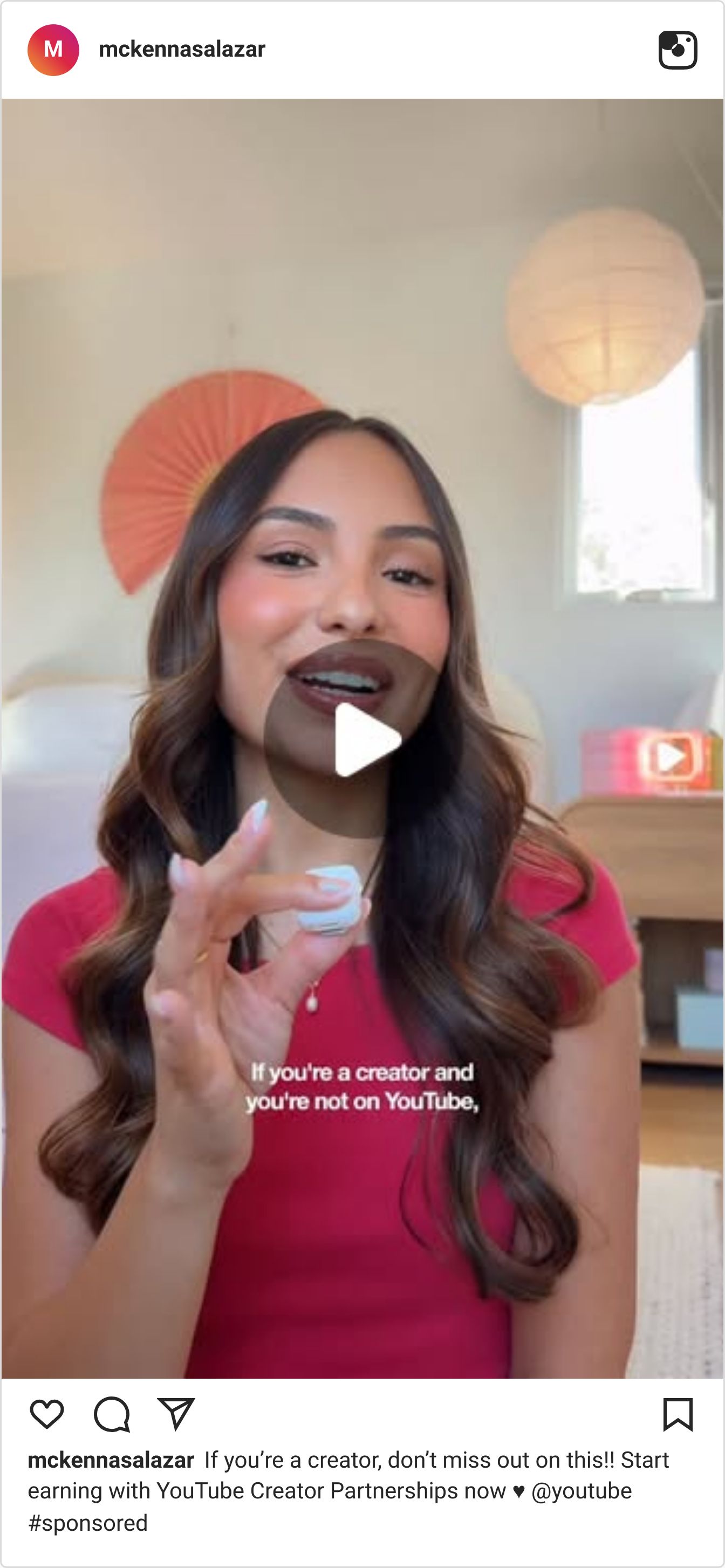
To start: an engaged audience in a clear niche and a simple media kit. Tools: creator marketplaces, influencer platforms, direct outreach by email.
Example: Ali Abdaal landed his first sponsorship in 2018, when his channel had about 50,000 subscribers.
2. Brand ambassadorships and retainers
Instead of one-off posts, a brand signs you for months at a time with a set number of deliverables each month. Ambassadorships pay less per post than one-off deals, but they give you something rare in creator work: predictable monthly income. Brands offer them to creators whose audience consistently matches their customers, so a sponsored post that performs well is often the start of one.
To start: a successful one-off campaign you can show results from. Watch for: exclusivity clauses that stop you working with competitors.
Example: Fantasy sports platform Faboom signed Bhuvan Bam as its brand ambassador, with the deal centered on him creating content for his existing followers.
3. User-generated content (UGC)
UGC creators make content that brands post on their own channels or run as ads. You never post it yourself, so follower count doesn't matter. Brands are paying for production quality and authentic-looking delivery. That makes UGC one of the few income streams open to complete beginners. Charge separately for usage rights, especially paid ad usage, because that's where most underpricing happens.
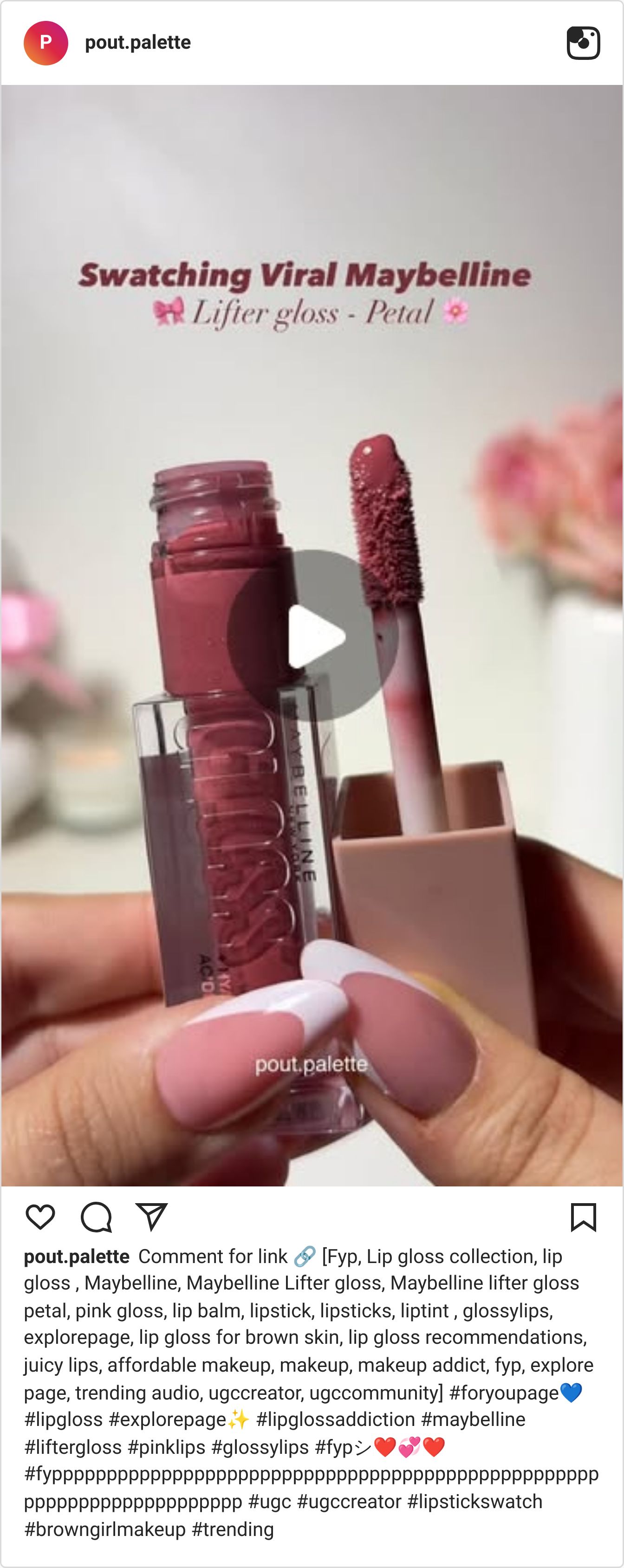
To start: a portfolio of three to five sample videos. Tools: UGC marketplaces, LinkedIn, and direct pitches to brands.
Example: Chad Lubinski spent 18 months trying to grow an Instagram following before switching to UGC. He now reports earning about $8,000 a month making videos for brands.
4. Affiliate marketing and creator storefronts
You share a tracked link or code and earn a commission when someone buys through it. Commission rates vary widely by category and program. Storefronts let followers shop everything you recommend in one place. Affiliate income builds slowly but compounds. A product review from last year can still earn today, especially on YouTube and Pinterest, where content stays searchable.

To start: honest product recommendations in your niche. Tools: Amazon Associates, LTK, ShopMy, and brand-run affiliate programs.
Example: Fashion creator Carrie Bankston grew her LTK earnings 115% year over year without changing her niche or platform. LTK's co-founder has said more than 200 women have become millionaires through the platform.
This is affiliate marketing built into the platform. You tag products directly in videos or livestreams, and buyers check out without leaving the app. TikTok Shop and YouTube Shopping are the main examples. Reported entry requirements for TikTok Shop's affiliate program start around 1,000 followers, but check the platform's current rules in your country.
To start: product demos and try-on content, which convert best. Note: availability varies by country.
Platforms pay you
6. Ad revenue sharing
Platforms place ads on your content and give you a share of the revenue. YouTube is the most established option. Full ad revenue through the YouTube Partner Program requires 1,000 subscribers, plus either 4,000 public watch hours in the past 12 months or 10 million Shorts views in 90 days. Long-form video in high-value niches like finance, tech, and business earns the most per view.
To start: consistent long-form uploads. Reality check: ad revenue rarely pays the bills alone until you reach significant view volume.
Example: In 2020, Ali Abdaal earned about £100,000 from AdSense, a fraction of his total income once affiliates, sponsorships, and courses were added.
7. Creator rewards programs
Some platforms pay creators directly based on views and engagement. TikTok's Creator Rewards Program requires 10,000 followers, 100,000 views in the last 30 days, and a minimum age of 18. It pays only on videos longer than a minute, at a reported rate of roughly $0.40 to $1.00 per 1,000 qualified views. Meta runs its own bonus programs on Instagram and Facebook, but their eligibility changes often and is frequently invite-only.
To start: check the monetization section of each app's creator dashboard. Note: programs are region-limited.
8. Live gifts and tips
During livestreams, viewers buy virtual gifts or send paid messages, and the platform converts them into cash for you after taking its cut. Examples include TikTok LIVE gifts, YouTube Super Chat, and Instagram badges. It suits creators who are comfortable being on camera for long stretches: gamers, musicians, educators, and anyone running Q&A sessions.
To start: a regular streaming schedule so viewers know when to show up. Reality check: earnings come from a small group of loyal viewers, not big audiences.
Example: Nigerian streamer Peller said his best single night on TikTok LIVE brought in about ₦10 million in gifts. A more typical case: a stream with about 300 viewers was estimated to earn around £345 after TikTok's cut.
Your audience pays you
9. Subscriptions, memberships, and paid newsletters
Fans pay monthly for bonus content, early access, community perks, or in-depth writing. Options include YouTube channel memberships, Instagram Subscriptions, Patreon, and Substack. This is the most stable income a creator can build, because it recurs and isn't tied to a brand's budget. The challenge is giving members enough value every month that they stay subscribed.
To start: a clear answer to "what do members get that free followers don't?" Works best for: niche experts and community-led creators.
Example: A few months after launching paid subscriptions, Lenny Rachitsky had about 15,000 free subscribers and 500 paying, worth roughly $65,000 a year.
10. Digital products
You create something once and sell it again and again: templates, presets, guides, ebooks, planners, or resource libraries. Educational creators do especially well here, because their audience already comes to them to learn. Start small and cheap to test demand before building anything bigger.
To start: turn your most-saved post into a downloadable product. Tools: Gumroad, Stan Store, Payhip, or Topmate and Instamojo for India-based sellers.
Example: Thomas Frank earned $1 million by 2022 from two Notion templates, priced between $49 and $179.
11. Courses, cohorts, and workshops
If people regularly ask how you do something, you can teach it. Courses range from a single live workshop to a multi-week cohort. Live formats are easier to start, because you can sell them before you build them, and they earn more per student than self-paced courses.
To start: run one paid live workshop on your most-requested topic. Tools: Zoom, Teachable, Kajabi, Graphy.
Example: Ali Abdaal's Part-Time YouTuber Academy earned $282,414 in 2020, passed $2 million in 2021, and brought in $1.76 million in 2022.
12. Merchandise and own product lines
Merch ranges from low-risk print-on-demand apparel to full product lines co-created with manufacturers. Print-on-demand means no inventory and no upfront cost, but margins are thin. Your own product line can earn much more, but it requires capital and turns you into a business operator.
To start: print-on-demand built around an inside joke or catchphrase your audience already uses. Reality check: merch sells to fans, not followers.
Example (an outlier): MrBeast's chocolate brand Feastables generated about $250 million in sales and over $20 million in profit in 2024.
13. Paid events, meetups, and speaking
Established creators turn online audiences into ticket sales through meetups, workshops, live recordings, and conferences. Brands and event organizers also pay creators to speak or host. Events build deeper loyalty than any post can, and speaking fees grow with your authority in your niche.
To start: a small paid meetup in your own city. Works best for: educational and community-driven creators.
Your skills pay you
14. Coaching and consulting
If your content shows real expertise, some followers will pay for one-on-one help. That might be career advice, fitness programming, business strategy, or creative feedback. Brands also hire experienced creators as consultants for their social strategy. Coaching earns the most per hour of any method here and needs only a small but trusting audience.
To start: offer a limited number of paid calls through a booking link. Tools: Calendly, Topmate.
15. Content licensing and freelance creative services
Your skills are sellable even without an audience. Photographers and videographers license footage to brands, publishers, and stock sites. Creators who've grown their own accounts get hired to run social media for businesses. This is often the most reliable income in the early stages, while audience-based income is still growing.
To start: package what you already do well as a monthly service. Tools: stock platforms, LinkedIn, freelance marketplaces.
Example: Jared Frank's clip of being kicked by a passing train in Peru was licensed through Jukin Media. It reached nearly 38 million views and earned him about $30,000.
Creator Monetization Matrix: Compare All 15 Methods
Not every income stream suits every creator. Some need a large audience, some need upfront money, and some take months before they pay anything. This matrix compares all 15 methods on what matters most when you're choosing where to start.
How to read it: Look for the rows with low startup cost, a fast time to first income, and no minimum audience. Those are your best first moves, whatever your follower count. As your audience grows, shift toward the methods with high scalability, where income can grow without your workload growing at the same rate.
Method | Who pays | Minimum audience | Startup cost | Time to first income | Scalability |
|---|---|---|---|---|---|
Sponsored posts and videos | Brands | Small but engaged, in a clear niche | Low | Weeks to months | Medium |
Brand ambassadorships | Brands | Past campaign results | Low | Months | Medium |
UGC | Brands | None | Low | Days to weeks | Medium |
Affiliate and storefronts | Brands (commission) | None to start | Low | Weeks | High |
Social commerce affiliate | Brands via platform | Platform threshold (varies) | Low | Weeks | High |
Ad revenue sharing | Platforms | 1,000 subscribers (YouTube) | Low to medium | Months | High |
Creator rewards programs | Platforms | 10,000 followers (TikTok) | Low | Months | Medium |
Live gifts and tips | Audience via platform | Platform's livestream threshold | Low | Days once eligible | Low to medium |
Subscriptions and newsletters | Audience | Small, loyal audience | Low | Weeks to months | High |
Digital products | Audience | Small, engaged audience | Low | Weeks | High |
Courses and workshops | Audience | Small, engaged audience | Low (live) to medium | Weeks | High |
Merch and product lines | Audience | Loyal community | Medium to high | Months | Medium to high |
Paid events and speaking | Audience or organizers | Established authority in your niche | Medium | Months | Low to medium |
Coaching and consulting | Clients | None to small | Low | Days to weeks | Low (limited by your time) |
Licensing and freelance services | Clients | None | Low | Days to weeks | Medium |
The pattern to notice: the fastest ways to earn your first income (UGC, coaching, freelance services) depend on your time and skills. The most scalable ones (affiliate, digital products, subscriptions, ad revenue) take longer to start paying. Most successful creators use the first group to earn early and build the second group in parallel.
How Much Money Do Influencers Make in 2026?
Most influencers earn far less than the headlines suggest. Income is concentrated at the top. Many creators make little or nothing, while a small group earns most of the money. According to Britannica's analysis, average influencer earnings are under $3,000 a month, and HypeAuditor data shows fewer than half of influencers (48.5%) make any money from their accounts at all.
The gap between top earners and everyone else is wide. One widely cited estimate is that the top 10% of creators receive about 62% of all creator payments. Platform payouts also vary a lot: TikTok's Creator Rewards Program reportedly pays around $0.40 to $1.00 per 1,000 qualified views, while long-form YouTube video in high-value niches can pay several times that.
So the better question isn't "how much do influencers make?" It's "what determines how much you can make?"
What affects how much an influencer earns
Niche. Finance, tech, B2B, and health audiences are worth more to advertisers than general entertainment, so sponsors and ad networks pay more to reach them.
Engagement. Brands increasingly pay for attention, not follower count. A smaller account with active comments and saves can out-earn a much larger passive one.
Audience location. Ad rates and brand budgets are higher in markets like the US and UK. The same view count earns different amounts depending on where viewers live.
Deliverables. A dedicated YouTube video, a 60-second integration, and a single story frame are priced very differently.
Usage rights and exclusivity. If a brand wants to run your content as ads or stop you working with competitors, that should cost extra. This is where creators most often underprice.
Number of income streams. Creators who add affiliate income, products, or memberships to brand deals earn more consistently than those who rely on sponsorships alone.
What brands are actually paying for
A brand isn't paying for your follower count. It's paying for one of three things: access to a specific audience, content it can reuse, or proof that you can drive sales. Once you know which of these you offer, you can price on value instead of guessing from your follower number.
Can You Make Money With Fewer Than 1,000 Followers?
Yes. Several income streams don't depend on audience size at all, because the person paying you is buying your skills or your recommendation, not your reach.

UGC. Brands pay for content they post on their own channels, so your follower count is irrelevant. All you need is a portfolio of three to five sample videos.
Example: Chad Lubinski spent 18 months trying to grow an Instagram audience and had only a few thousand followers when a brand first reached out about his content. He switched to UGC and now reports earning about $8,000 a month creating videos for brands.
Affiliate marketing. Most affiliate programs, including Amazon Associates, accept small creators. A handful of honest, searchable product reviews can earn commissions long after you post them, especially on YouTube and Pinterest.
Freelance services. If you can edit video, write captions, or manage an Instagram account, businesses will pay for those skills directly. Your own account works as your portfolio.
Small digital products. A template, checklist, or guide priced low can sell to even a few hundred engaged followers, especially if it answers questions they already ask you.
Licensing a single clip. If one of your videos takes off, licensing agencies may offer to pay for the rights, no matter how small your account is.
Example: Jared Frank's clip of being kicked by a passing train in Peru was licensed through Jukin Media. It reached nearly 38 million views and earned him about $30,000. Before signing, read the terms carefully, since some licensing deals hand over distribution rights permanently.
YouTube's early tier. At 500 subscribers, with enough recent uploads and watch hours or Shorts views, creators can join the YouTube Partner Program for fan funding and Shopping. Ad revenue still requires 1,000 subscribers.
What usually won't work yet: ad revenue, creator rewards programs, and most paid sponsorships. These all depend on reach. Treat them as goals for later, and use the methods above to start earning now.
Which Monetization Strategy Fits Your Stage?
The right income streams depend on where you are now. Trying to sell a course to 300 followers, or relying on UGC at 200,000, leaves money on the table. Here's where to focus at each stage.
Under 1,000 followers: earn from your skills
Your audience isn't big enough to sell yet, so sell what you can do. Start with UGC, freelance services, and affiliate links in searchable content. The goal at this stage is your first income and a portfolio, not scale.
Example: Chad Lubinski moved from chasing followers to making UGC for brands and now reports about $8,000 a month.
1,000 to 50,000 followers: earn from trust
You now have a small audience that trusts you, which is often more valuable than a big one. Add affiliate marketing, small digital products, a paid newsletter or membership, and your first paid brand deals. Keep one skills-based stream running so your income doesn't depend only on your audience.
Example: A few months after launching paid subscriptions, Lenny Rachitsky had about 15,000 free subscribers and 500 paying, worth roughly $65,000 a year.
50,000+ followers: earn from leverage
At this stage, brands start approaching you, and products can scale beyond your own time. Focus on ambassadorships, ad revenue, courses or cohorts, and eventually your own products. Spread income across at least three streams so no single brand or platform controls your business.
Example: Ali Abdaal landed his first sponsorship at around 50,000 subscribers. His course, Part-Time YouTuber Academy, later became his largest income stream.
Ready to start? See our 30-day plan for landing your first paid creator deal. [INTERNAL LINK]
Frequently Asked Questions
How many followers do you need to make money?
You don't need any followers to start. UGC, freelance services, and affiliate marketing don't depend on audience size. Platform programs do: YouTube ad revenue requires 1,000 subscribers, and TikTok's Creator Rewards Program requires 10,000 followers and 100,000 views in the past 30 days.
Can you make money on Instagram with 500 followers?
Yes, but usually not through Instagram's own monetization tools, which tend to need a larger audience. At 500 followers, the realistic options are affiliate links, UGC for brands, freelance services, and small digital products. Use your account as a portfolio while your audience grows.
How do influencers get paid by brands?
Most brand deals pay a flat fee for agreed deliverables, sometimes combined with a commission on sales or a monthly retainer. Creators send an invoice and receive payment by bank transfer or through an influencer platform. Payment often arrives 30 to 60 days after invoicing, so check the terms before signing.
For direct platform payouts, YouTube generally pays the most, especially for long-form videos in high-value niches like finance and tech. But for most creators, brand deals pay more than any platform program. The platform where your audience is most engaged usually matters more than the payout rate.
Is affiliate marketing worth it for small creators?
Yes. Most programs accept small creators, and there's no startup cost. Earnings usually begin small but build over time, because searchable content like YouTube reviews and Pinterest pins keeps earning commissions long after it's posted. It works best when you only recommend products you actually use.
Can content creators earn money without showing their faces?
Yes. Faceless creators earn through tutorial and voiceover YouTube channels, hands-only product videos for UGC, newsletters, digital templates, and stock footage licensing. Brands care about content quality and audience trust, not whether your face appears on camera.
Do influencers have to pay tax on gifted products?
In many countries, yes. Gifted products can count as taxable income, especially when they come with posting obligations. Rules differ by country and change often. Keep a record of everything you receive and check with a local accountant once brand collaborations become regular.