UAE Creators Get Direct Access to Global Amazon Customers
UAE creators can now sell products globally on Amazon, signaling a shift from brand-led influencer marketing to creator-owned commerce models.


Content creators in the United Arab Emirates are getting a direct path from audience to ownership. Under a new initiative called Amazon Creators Foundry, creators based in the UAE can now launch, market, and sell their own products to customers worldwide using Amazon’s global marketplace infrastructure.
The move marks a significant shift in how creators in the region can monetize their influence. Instead of relying primarily on brand partnerships and sponsored content, UAE creators are being encouraged to build consumer brands of their own — using Amazon’s logistics, fulfillment, and cross-border commerce capabilities to reach international buyers at scale.
What Is Amazon Creators Foundry?
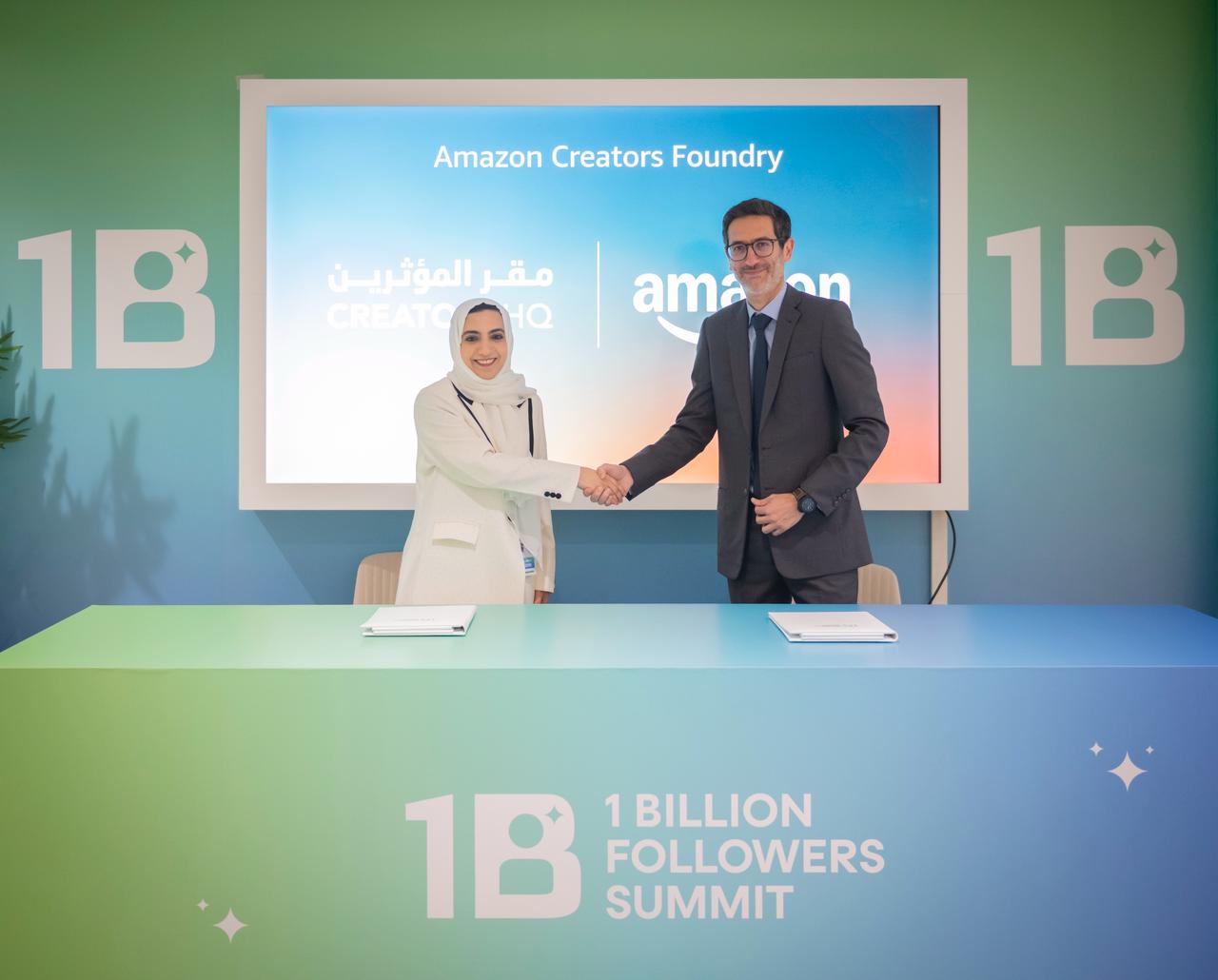
Amazon Creators Foundry is a commerce-focused initiative designed to help content creators move beyond sponsored posts and affiliate links to building and selling their own products. The program enables eligible creators to develop consumer brands and distribute them globally using Amazon’s existing marketplace, logistics, and fulfillment infrastructure.
Under the Foundry, creators receive support across the product lifecycle—from concept and branding to manufacturing, listing, and international distribution. Instead of directing audiences to third-party brands, creators can now own the entire value chain, selling directly to consumers on Amazon’s platforms worldwide.
The initiative was announced at the 1 Billion Followers Summit in Dubai, positioning the United Arab Emirates as one of the early markets where creators are being encouraged to transition from marketing partners to independent sellers. For Amazon, the model taps into creators’ existing audience trust and distribution power. For creators, it offers access to global ecommerce without the overhead typically required to scale a direct-to-consumer business.
Unlike traditional influencer programs that focus on promotion, Amazon Creators Foundry is built around ownership of products, customer relationships, and long-term revenue streams.
Why Amazon Is Betting on Creators
For Amazon, creators represent more than a marketing channel — they are ready-made distribution engines. With loyal audiences and direct influence over purchasing decisions, creators can reduce one of ecommerce’s biggest challenges: customer acquisition.
The move also reflects a broader shift in the creator economy. As competition for brand sponsorships intensifies and platform payouts remain unpredictable, creators are looking for more stable and scalable revenue streams. Commerce —particularly product ownership — offers longer-term upside compared to one-off brand deals.
For Amazon, the strategy strengthens its position as the infrastructure layer of the creator economy. By offering fulfillment, logistics, and global reach, the company lowers the barrier for creators to become entrepreneurs — while keeping transactions, data, and customer relationships within its ecosystem.
Why the UAE Is a Strategic Launch Market
The United Arab Emirates has emerged as a fast-growing hub for the creator economy, making it a logical testing ground for commerce-led creator programs. High social media penetration, a young digital-first population, and strong ecommerce adoption have created favorable conditions for creators to scale beyond content and into business ownership.
The region has also seen increasing institutional support for digital entrepreneurship. Government-backed initiatives, creator summits, and platform partnerships have positioned the UAE as a regional base for influencers, content creators, and online businesses targeting global audiences. Hosting the 1 Billion Followers Summit — where the Foundry was announced — reinforces this positioning.
From a logistics perspective, the UAE offers a strategic advantage. Its location between Europe, Asia, and Africa makes it a natural cross-border commerce hub. Combined with Amazon’s fulfillment infrastructure, creators based in the UAE can reach international customers without managing complex supply chains themselves.
For Amazon, launching the Creators Foundry in the UAE allows the company to tap into a concentrated creator ecosystem while testing how effectively creators can transition from influence-driven promotion to full-scale product commerce.
What This Means for Creators
For creators, the launch of Amazon Creators Foundry introduces a shift from short-term monetization to long-term ownership. Instead of relying primarily on sponsored content and affiliate commissions, creators now have the opportunity to build proprietary products and generate recurring revenue from direct sales.
However, the move also introduces new responsibilities. Product development, pricing, inventory decisions, and brand positioning require a different skill set than content creation alone. While Amazon provides infrastructure and operational support, creators assume greater risk compared to traditional brand partnerships.
In return, the upside is significantly higher. Ownership allows creators to control margins, intellectual property, and customer relationships — assets that compound over time. As the creator economy matures, programs like the Foundry signal a broader shift: influence alone is no longer the end goal; sustainable businesses are.
Impact on Brands and Influencer Marketing
The expansion of creator-led commerce is likely to reshape traditional influencer marketing dynamics. As creators begin launching and scaling their own products, they move from being brand partners to potential competitors — particularly in categories such as beauty, fashion, fitness, and lifestyle, where creator influence is already strong.
For brands, this shift may reduce the long-term effectiveness of one-off sponsorships. Creators who own products have less incentive to promote competing brands, especially if those endorsements dilute their own brand positioning. This could push companies to rethink how they engage with creators, focusing more on long-term collaborations, co-created products, or equity-based partnerships.
The rise of creator-owned brands also changes how influence is measured. Performance may increasingly be judged by conversion and repeat purchases rather than reach or engagement alone. In this environment, creators with smaller but highly engaged audiences could become more valuable than those with large but less focused followings.
For the influencer marketing industry, the trend signals a move away from promotion-first models toward commerce-first strategies. Platforms like Amazon are positioning themselves at the center of this transition, providing the infrastructure that allows creators to operate as independent businesses rather than just marketing channels.
The Bigger Picture: From Influence to Infrastructure
The launch of Amazon Creators Foundry reflects a broader transformation underway in the creator economy. As platforms mature and brand budgets become more performance-driven, influence alone is no longer sufficient. The next phase is about control over products, distribution, and revenue.
Across global markets, creators are increasingly being treated as businesses rather than media channels. Platforms are responding by offering tools that reduce friction between the audience and the transaction. In this model, content becomes the top of the funnel, while commerce becomes the core engine.
For Amazon, the strategy reinforces its role as the infrastructure layer powering creator-led entrepreneurship. By embedding creators deeper into its marketplace, the company strengthens its ecosystem while expanding the diversity of products available to consumers.
Whether similar initiatives will be rolled out in other regions remains to be seen. But the direction is clear. As creators move from promoting brands to building them, the lines between influencer marketing, ecommerce, and entrepreneurship are continuing to blur.
What began as influence is increasingly becoming distribution — and, ultimately, ownership.